
A residents’ petition shows community support, but it does not itself give legal authority or bind the Parish Meeting. Any proposed work must still be agreed through proper village process and must comply with any permissions, consents or legal duties that apply. This petition has been put together in conjunction with advice from experts including Yorkshire Wildlife Trust.
Residents’ Petition
Ferrensby Pond should be cared for, improved and enjoyed by the village. This petition does not argue against improvement. It asks that any improvement protects the habitat that keeps the pond healthy.
Our central point is simple: protect the pond’s wildlife and water quality while making the area attractive, accessible and welcoming for residents.
Vegetation around the pond is not just “untidiness”. It helps slow runoff, trap sediment and nutrients, shelter wildlife and give the pond the natural edge it needs to function well.
We recognise that residents want the pond area to look cared for. The answer is not neglect, but thoughtful management that makes wildlife-friendly areas look deliberate, safe and well looked after.
Significant changes should therefore be proportionate, evidence-led and agreed through proper village processes before work begins.
Making habitat understandable, rather than simply “untidy”
The pond should be managed as a living freshwater ecosystem, with ecological function considered alongside appearance, access and community use.
We support positive improvements that make Ferrensby Pond more attractive, accessible and useful for the community, provided they are compatible with the ecology of the site. These include:
- improved access where it is safe and appropriate;
- seating and resting places;
- flowering plants, raised planters and attractive planting;
- interpretation signs explaining the pond, wildlife and seasonal vegetation;
- supervised activities such as pond dipping, wildlife recording and village education;
- sensitive maintenance that protects water quality and habitat.
We are concerned about wholesale vegetation removal, unnecessary short mowing, bare ground around runoff routes, and work carried out without a clear purpose, method, timing or ecological consideration.
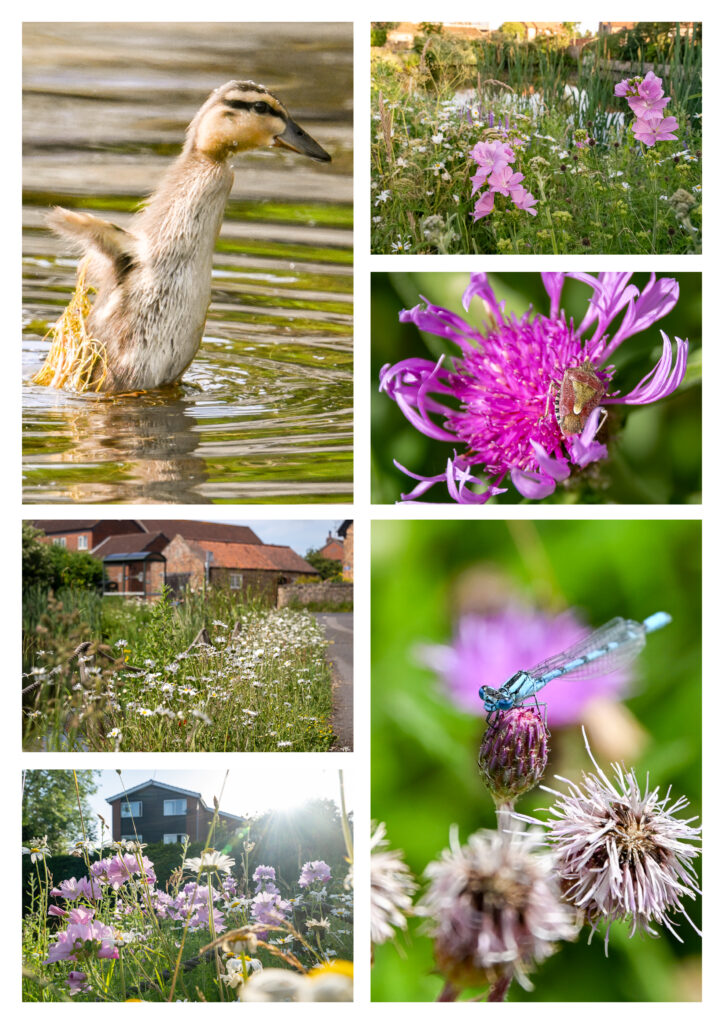
What we already know about Ferrensby Pond
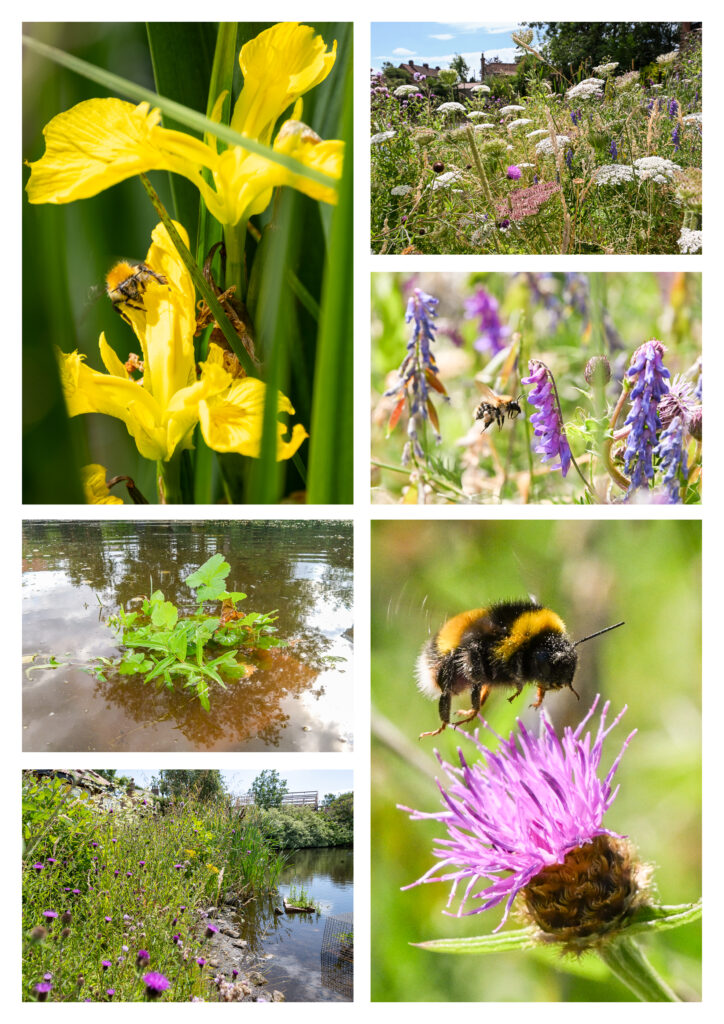
Local evidence matters
- Ferrensby’s ecological report identified road runoff and nutrient enrichment as important issues for the pond.
- The existing vegetation around the pond provides useful edge structure and habitat.
- Vegetated buffer areas help intercept runoff before it reaches water bodies.
- Removing or repeatedly cutting vegetation may reduce this natural protection.
- Any proposed change should therefore take into account effects on water quality, sediment, nutrients and wildlife before work begins.
National guidance supports this cautious approach. Government and environmental guidance recognise that vegetated buffers can help reduce pollution entering water bodies, while pond-management guidance encourages decisions based on the actual condition of the pond rather than aesthetics alone.
Connection with local nature recovery
The pond and surrounding verge habitat are part of North Yorkshire Council’s Local Nature Recovery Strategy work. Relevant priorities include expanding and restoring pond networks and enhancing road verges. These aims are consistent with improving water quality, biodiversity, pollination, flood resilience, access to nature and education.
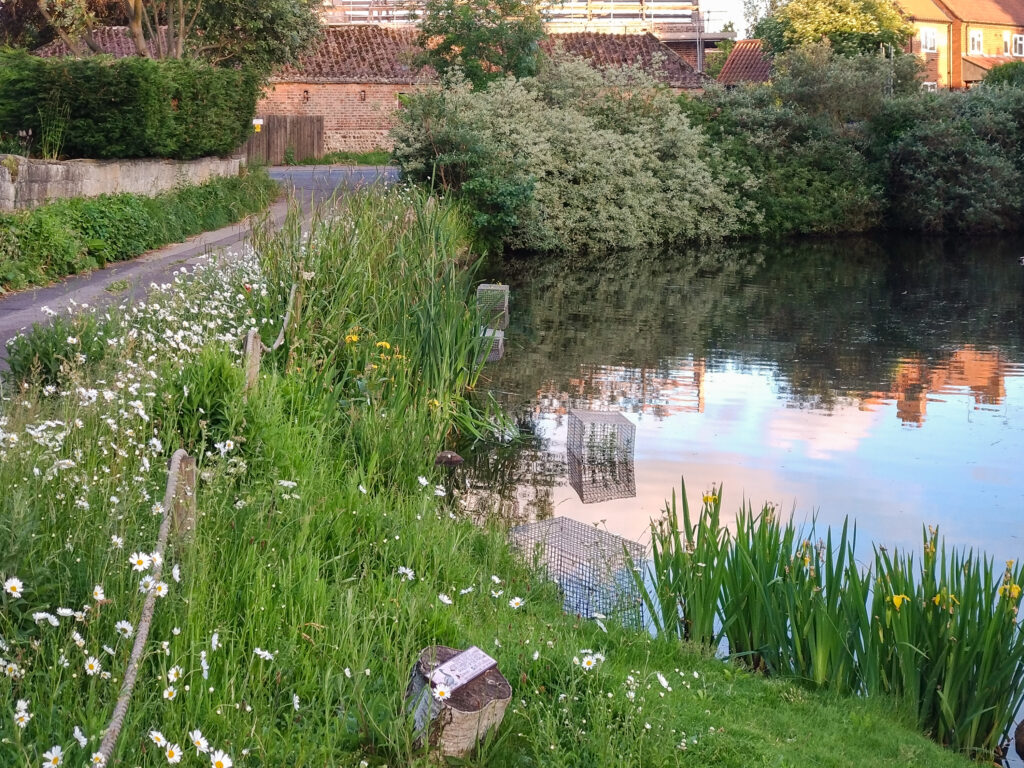
Proposed management principles
1. Protect water quality and runoff
- Keep established vegetated cover around the pond and along runoff routes where it slows, intercepts or absorbs water.
- Avoid unnecessary bare ground, wholesale vegetation removal or routine short mowing around the pond.
- Where short-mown areas are needed for access, seating or recreation, keep them clearly defined and no larger than necessary.
- Remove cuttings from pond margins and runoff areas so they do not decompose into the water.
- Consider sediment, nutrient and pollution risks before work is undertaken.
2. Protect habitat around and within the pond
- Retain a varied mix of open water, marginal plants, emergent plants and longer surrounding vegetation.
- Avoid wholesale cutting of pond margins.
- Keep seasonal standing vegetation, seedheads and overwintering habitat where appropriate.
- Manage vigorous vegetation selectively when needed, rather than removing whole areas because they look untidy.
- Check whether protected species or their supporting habitat may be affected before significant work takes place.
3. Make wildlife-friendly management look intentional
- Use low, wildlife-permeable edging or fencing where it helps show that planted areas are being deliberately managed.
- Use narrow mown strips only where they help define access or make the area look cared for.
- Add simple signs explaining why some vegetation is left longer at different times of year.
- Use planting, seating and interpretation to make the pond feel welcoming without damaging habitat.
4. Manage according to the pond’s actual conditions
- Choose planting that can survive the real site conditions.
- Protect new plants while they establish, where necessary.
- Use observation, evidence and proportionate ecological advice rather than appearance alone.
- Adopt small-scale, reversible or trial changes where the outcome is uncertain.
- Monitor changes and adjust management if water quality, habitat or wildlife is adversely affected.
Before significant work: a simple decision checklist
Before any work that would materially change established vegetation, pond margins, ground cover, drainage, runoff or aquatic habitat, the Parish Meeting or properly authorised body should ask:
- What problem are we trying to solve?
- Where exactly will the work take place?
- How much vegetation, ground cover or pond habitat will be affected?
- Could the work affect water quality, runoff, sediment, nutrients, wildlife or protected species?
- Is there a less damaging way to achieve the same result?
- Is proportionate ecological advice needed before work begins?
- What timing, method and safeguards will reduce risk?
- How will the outcome be monitored?
Ecological advice should inform decisions, not prevent reasonable improvement. If a proposal differs materially from relevant ecological advice, the decision, evidence considered, agreed scope of work and reasons for departing from that advice should be clearly recorded.
Protected species and legal caution
Some species that may use pond habitats or nearby vegetation, including bats and otters, are legally protected in England. This does not mean every small task is impossible. It does mean that significant work should be considered carefully before it starts, especially where it may affect water, bankside habitat, shelter, feeding routes or resting places.
Where there is uncertainty or potential for harm, proportionate advice from a suitably qualified ecologist should be sought before work begins.
What we ask the Parish Meeting to adopt
We ask the Parish Meeting to adopt these principles as a guide for future decisions, so Ferrensby Pond can remain attractive, accessible, ecologically healthy and valued by the whole village.
These principles do not authorise any individual to undertake work. No work should be carried out on the basis of this petition alone. Any proposed work should first be considered and agreed through the appropriate Parish Meeting or other properly authorised process, and any required permission, consent or licence from a landowner, local authority or statutory body remains necessary.
Sources and guidance
- GOV.UK pond and waterbody management guidance: supports managing ponds for biodiversity, water quality and habitat quality.
- Environment Agency buffer-strip research: explains how vegetated buffers can help intercept diffuse pollution and runoff before it reaches water bodies.
- Natural England buffer-strip guidance: explains that permanent vegetation near ponds and other water bodies can help protect water quality and create habitat.
- RHS pond-care guidance: advises avoiding excessive intervention and delaying some cutting of marginal plants to protect invertebrates.
- Freshwater Habitats Trust pond-management guidance: encourages evidence-based pond management and cautions against unnecessary removal of pond plants.
- GOV.UK protected species guidance: explains legal protection and decision-making considerations for bats and otters in England.
- North Yorkshire Local Nature Recovery Strategy: identifies pond networks and road verges as relevant nature recovery priorities.
Links:
Government Pond Management
https://www.gov.uk/find-funding-for-land-or-farms/wbd1-manage-ponds
RHS Wildlife Ponds
https://www.rhs.org.uk/ponds/wildlife-ponds
Freshwater Habitats Trust – Pond Management
https://content.freshwaterhabitats.org.uk/2013/09/Biggs-et-al-1994-New-approaches.pdf
Government, Environment, Protected species advice:
https://www.gov.uk/guidance/otters-advice-for-making-planning-decisions
https://www.gov.uk/guidance/bats-advice-for-making-planning-decisions
Local Nature Recovery strategies, Government and North Yorkshire Council
Conservation of Habitats and Species Regulations 2017 (British Wildlife Rehabilitation Council, with link to UK Legislation)
https://www.bwrc.org.uk/wildlife-legislation/conservation-of-habitats-and-species-regulations-2017/
Wildlife and Countryside Act 1981 (UK Legislation)
https://www.legislation.gov.uk/ukpga/1981/69
Supporting documentation – Yorkshire Wildlife Trust – 2026/09/24 Ferrensby Pond as witnessed by Laura Harman – Nature Reserves Manager (North Central Region)
Supporting documentation – 2019/05 Ferrensby Pond as witnessed by Bernadette Lobo BSc (Hons) MIEEM of Lobo
Ecology, prior to the commencement of the dredging and ecological enhancements